Wednesday, December 30, 2009

Frankenstein , or The Modern Prometheus


TODAY IN HISTORY: December 30, 1816

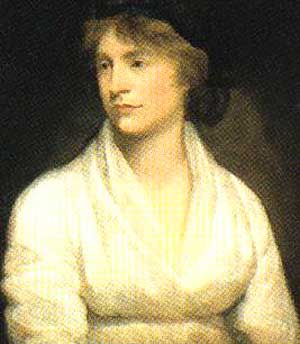
Percy Bysshe Shelley and Mary Wollstonecraft Godwin wed

On this day, Percy Bysshe Shelley and Mary Wollstonecraft Godwin wed. The pair had run away together in July 1814, but because Shelley was already married they were unable to marry for two years, until the death of Shelley's wife.

Shelley, the heir to his wealthy grandfather's estate, was expelled from Oxford when he refused to acknowledge authorship of a controversial essay. He eloped with his first wife, Harriet Westbrook, the daughter of a tavern owner, in 1811. However, just a few years later Shelley fell in love with the young Mary Wollstonecraft Godwin, daughter of a prominent reformer and an early feminist writer. Shelley and Godwin fled to Europe and married in 1816.

Shelley's inheritance did not pay all the bills, and the couple spent much of their married life abroad, fleeing Shelley's creditors. While living in Geneva, the Shelleys and their dear friend Lord Byron challenged each other to write a compelling ghost story. Only Mary Shelley finished hers and later published the story as Frankenstein.

The Shelleys had five children, but only one lived to adulthood. After Shelley drowned in a sailing accident when Mary was only 24, she edited two volumes of his works. She lived on a small stipend from her father-in-law, Lord Shelley, until her surviving son inherited his fortune and title in 1844. She died at the age of 53. Although she was a respected writer for many years, only Frankenstein and her journals are still widely read.

)))))))))))))))))))))))
For more on Mary and Percy, please check out this link:

http://www.carondelet.pvt.k12.ca.us/frankenstein/MaryShelley/Second%20Page%20%28mary%20Shelly%29.htm


Widget_logo

Wednesday, December 23, 2009

"Love Calls Us to the Things of This World": Diane Savino


“Turn on the television. We have a wedding channel on cable TV devoted to the behavior of people on the way to the altar. They spend billions of dollars, behave in the most appalling way, all in an effort to be princess for a day. You don’t have cable television? Put on network TV. We’re giving away husbands on a game show. You can watch The Bachelor, where thirty desperate women will compete to marry a 40-year-old man who has never been able to maintain a decent relationship in his life.”

“That’s what we’ve done to marriage in America, where young women are socialized from the time they’re five years old to think of being nothing but a bride. They plan every day what they’ll wear, how they’ll look, the invitations, the whole bit, they don’t spend five minutes thinking about what it means to be a wife. People stand up there before god and man even in Senator Diaz’s church, they swear to love honor and obey, they don’t mean a word of it. So if there’s anything wrong with the sanctity of marriage in America, it comes from those of us who have the privilege and the right and have abused it for decades.”

Wednesday, December 16, 2009

Circling Something: Matisse and Simon

Matisse, The Banquet


Simon and Garfunkel sing a "Cyrcle" song that's actually a S/G song.

Happy B-Day


Unrequited love is a central theme of Peanuts: while Sally worships Linus, Peppermint Patty and Marcie adore Charlie Brown, Charlie Brown pines for the Little Red-Haired Girl, and Lucy LOVES Schroeder - in no case is the feeling reciprocated.

Schulz once remarked, "I don't know why there's so much unrequited love in my strip. I seem to be fascinated by unrequited love, if not obsessed by it... There's something funny about unrequited love - I suppose it's because we can all identify with it. We've all been turned down by someone we love, and it's probably the most bitter blow in life."

Unrequited love also plagued Beethoven's life. Though it was reported that he made many conquests of the heart as a young man, his love objects were frequently women who were unavailable because they were of noble birth and he was not. Noble women who married someone of a lower class lost both their nobility and rights to income from their estates. In 1804 Beethoven fell in love with a beautiful widow named Josephine von Brunswick, an accomplished pianist. Though she loved him in return, she had to renounce Beethoven because of her four children, who would have also lost their nobility and inheritances if she had followed her heart. Before she turned him down, he confided in a powerful love letter: "My heart will only - cease - to beat for you - when - it no longer beats -"

His most famous love letter was written on July 6-7, 1812, to a woman he only named as his "Immortal Beloved" in the middle of the letter. The identity of the woman remains hotly contested even today, but, in keeping with his pattern, all three leading candidates were married women in 1812. The ten-page letter is full both of passion and ambivalence: "Can our love exist but by sacrifices, by not demanding everything... I can only live either wholly with you or not at all, yes, I have resolved to stray about in the distance, until I can fly into your arms and can call myself entirely at home with you... never can another own my heart, never- never -... at my age I would need conformity regularity of life - can this exist in our relationship?" The letter closes with passion: "today -yesterday - What tearful longing for you - you - you - my life - my all - farewell - o continue to love me-"

(This is from the amazing website of the American Beethoven Society (link above), whose recordings and exhibits are first rate. Listen to some Beethoven today, or play it beautifully, or haltingly as I did, 35 years after my last piano recital, when I played Adagio Cantabile,, also known as Pathetique. I'm no musician, but I'm thankful every day for those lessons.

I'm also thankful today for reciprocated love. Who else had coffee and pale blue iris in bed for Beethoven's birthday? Harvey is amazing).

Monday, December 14, 2009

Rainy Days and Mondays and Bad Hair


"It's only hair. It will grow out." I think I read that in Ann Landers.

Whoever wrote "Monday's Child is fair of face" hasn't seen my face this Monday: Crestfallen with cowlicks. (Are cowlicks the italics of hair?)

Monday, December 07, 2009

Happy Birthday, Willa Cather! (from Today in History)

December 7, 1873
Willa Cather is born


On this day in 1873, Willa Cather is born in Winchester, Virginia. Cather was the first of seven children born to an old Virginia family dating back to colonial times. Her maternal grandfather served several terms in the Virginia House of Delegates. Her grandmother was a strong, courageous woman who had a powerful influence on Cather and served as the model for several of her characters.

Cather's family moved to Red Cloud, Nebraska, when she was a child, and for the rest of her life she wrote about the deep conflict she felt between East and West. While books like O Pioneers (1913) and My Antonia (1918) celebrated the spirit of the frontier, in other works, such as The Song of the Lark (1915), she explores the stifling effects of small-town life on creative young minds.

After graduating from the University of Nebraska in Lincoln in 1895, Cather moved to Pittsburgh to be an editor for a family magazine. She later became an editor for the daily paper in Pittsburgh. In 1901, she became a teacher and stuck with it for several years while she published her first book of verse, April Twilights (1903), and her first collection of stories, The Troll Garden (1905). She moved to New York to take a job as managing editor of McClure's, a monthly publication, and began writing novels. Her first, Alexander's Bridge, appeared in 1912, but she didn't find her true voice until O Pioneers. Cather won a Pulitzer in 1922 for One of Ours. Her 1927 novel, Death Comes for the Archbishop, the story of two French-Canadian priests who build a cathedral in the wilds of New Mexico, was also well received. Cather lived most of her adult life in New York, writing novels until she died in 1947.


I like this photograph of Cather because the geometry of her dress parallels the geometry of her bookshelves. (It's very Mission, just like the slats of the desk at which I sit and two of the bookcases in my study!)

Here's another fascinating tidbit about Cather. Back when she plaited her plaits along the Platte, she signed her name as William Cather, M.D. and listed her favorite job duty as "amputating limbs." For a look at her autograph, check out this link:


http://www.willacather.org/cather-blog/455-coming-soon-wm-cather-md-and-the-mental-portrait-album


Widget_logo

Wednesday, December 02, 2009

Marilyn Monroe, Home Video


My Lord, she was beautiful. That profile shot could crack your heart clean as a walnut.
_____________________

Rob Brezny's Astrology: Horoscope for Cancer

CANCER (June 21-July 22): Lately you remind me of the person Robert Hass describes in his poem "Time and Materials": "someone falling down and getting up and running and falling and getting up." I'm sending you my compassion for the times you fall down, and my admiration for the times you get up, and my excitement for the times you run. It has probably become clear to you by now that the falling down isn't a shameful thing to be cursed, but rather is an instrumental part of the learning process that is teaching you marvelous secrets about getting back up and running.

I find this post particularly intriguing, as this has been my life after stroke. I'm not running yet, but I am working and writing and reading and thinking. There are many marvelous secrets I have yet to learn.