When dictionaries and thesauri fail, I turn to my children for advice. Raleigh outdid herself today.
Q & A:
(Raleigh at Nine Solves Two Poetic Dilemmas)
What rhymes
with orange?
Door hinge.
What rhymes
With silver?
Pilver, you
Know, when
I'm rustling
Through your
Purses for
Loose dimes,
State quarters?
Pilvering, Mommy.
I'm doing
It now.
Monday, October 23, 2006


Sunday, October 22, 2006
Who says literature no longer inspires?
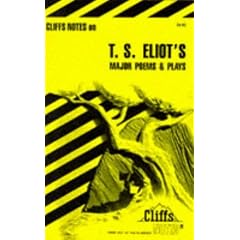
Not I--one of my students cried this semester, but I'm pretty sure it wasn't the bumblebee version of "The Love Song of J. Alfred Prufrock" that inspired her.
______
Update: Coincidence? I think not.
Here's this:

and this:

______
Update: Coincidence? I think not.
Here's this:
and this:

Saturday, October 21, 2006
Sparks Flew!

"ScienceIQ.com suggests shutting yourself into a pitch black room with a package of Wint-O-Green Lifesavers® and letting your eyes adjust to the darkness. Bare your teeth and bite one of the candies in half, then bite again — trying not to get the candy wet. The sparks, they say, will fly. ScienceIQ.com explains it this way: "When light flashes due to a material being fractured or deformed, it is called triboluminescence; tribo meaning 'friction' and luminescence meaning 'to emit light'.
"For almost three hundred years, scientists didn't know what was causing these sparks to occur. Now, they attribute it to an asymmetry in a crystal that shifts or relaxes when the crystal is crushed or deformed. The energy given off when this asymmetry relaxes comes in the form of light. "Wint-O-Green Lifesavers® are made from sugar and wintergreen flavoring. The sugar forms a crystal, and the wintergreen flavoring is the impurity needed to give the crystal an asymmetric structure. Other materials do this too, such as adhesive tape and sugar cubes."
______
Now I have enough material to write my first chick-lit novel: A heroine with Chiclet teeth who's addicted to chick lit herself; an annoying romantic counterpart, also with Chiclet teeth, perhaps with one slightly overlapping incisor, just to make him different/less perfect than our heroine; and, best of all, an actual way to make sparks fly between them. Mix all ingredients well; add excellent poem (out of context) and Prada handbag; bake at 102 degrees until romance scenes are slightly scorched; serve at wedding reception with ganaching of both cake frosting and Chiclet teeth of slightly jealous girlfriend.
Tuesday, October 17, 2006
Learning to Learn/Gullible's Travels
My heretofore secret poetry crush on the Sublibrarian is now publicly acknowledged.
Only now am I beginning to learn how to learn to write poems. (And please don't tell me that poems "save" me, although I want to chant in other tongues (Snyder, Eliot) and handle "The Snakes of September."
(Note to Self: How can I work the Church of Jesus Christ with Signs Following into a poem? I was taken inside a church where there were snakes and strychnine).
____
REGISTER TO VOTE.
next to of course god america i
"next to of course god america i
love you land of the pilgrims' and so forth oh
say can you see by the dawn's early my
country 'tis of centuries come and go
and are no more what of it we should worry
in every language even deafanddumb
thy sons acclaim your glorious name by gorry
by jingo by gee by gosh by gum
why talk of beauty what could be more beaut-
iful than these heroic happy dead
who rushed like lions to the roaring slaughter
they did not stop to think they died instead
then shall the voice of liberty be mute?"
He spoke. And drank rapidly a glass of water
___________
This has always been my touchstone political poem. If you're not gullible, if you vote for the candidate who sounds least like this, you'll sleep at night like a

Only now am I beginning to learn how to learn to write poems. (And please don't tell me that poems "save" me, although I want to chant in other tongues (Snyder, Eliot) and handle "The Snakes of September."
(Note to Self: How can I work the Church of Jesus Christ with Signs Following into a poem? I was taken inside a church where there were snakes and strychnine).
____
REGISTER TO VOTE.
next to of course god america i
"next to of course god america i
love you land of the pilgrims' and so forth oh
say can you see by the dawn's early my
country 'tis of centuries come and go
and are no more what of it we should worry
in every language even deafanddumb
thy sons acclaim your glorious name by gorry
by jingo by gee by gosh by gum
why talk of beauty what could be more beaut-
iful than these heroic happy dead
who rushed like lions to the roaring slaughter
they did not stop to think they died instead
then shall the voice of liberty be mute?"
He spoke. And drank rapidly a glass of water
___________
This has always been my touchstone political poem. If you're not gullible, if you vote for the candidate who sounds least like this, you'll sleep at night like a

Saturday, October 14, 2006
"Ouch--the truth hurts"--On Charles Wright

Wright's paradoxical sentiments come wrapped in gently meandering lines and sentences that seem not to want to end lest they appear to conclude. It would be interesting to get a look at the keyboard where Wright types; I picture his comma key worn down to a nub and the period filmed with dust.
In this review of Charles Wright's poetry, Joel Brower describes Wright as "meandering" between Stevens' abstractions and W.C. Williams' insistence on things. It's an excellent analysis of a poet who, frankly, does wander lonely as a cloud and cloudlike too among the littered vale.
What interest me most about Charles Wright's poems are:
1. His use of the line.
Wet days are their own reward for now,
litter's lapse and the pebble's gleam.
The qualifying, renaming, appositional structure of what my teacher called the "low rider" line" really is a tic in Wright's writing.
2. Wright's use of the landscape, the still life, although very decorated, dense with description, is lovely, layered, full, and empty, too, of people. I don't know why his landscape's so uninhabited--not static, just fluctuating. This has always bothered me--and I often think it's a flaw in the way I approach poetry--I wonder what am I missing as a reader (lacking in understanding), because I long for a you, an I, a he to make more frequent appearances in his work? Somebody, nobody, the people show up, in prayerful addresses to a God who's not listening...
Pity the people, Lord, pity their going forth and their coming back,
Pity their sumptuous barricades
against the dark.
Show them the way the dirt works.
Show them its sift, the aftermath and the in-between.
Judy Jordan was Wright's student, and she favors his use of description/landscape and his low-riding line in her poetry, but it is a poetry that's peopledelegiacegaic when it's not... Carolina Ghost Woods , I'm sure isn't better written(and what does that word mean, anyway--better--are we writing against each other?), but for me the church has to have the doors open, the people spilling out or trapped within and not just leaf-lapse and gravel glut in an abandoned parking lot of a sidesaddled church spraddled on its foundation...
Here's Jordan (from Carolina Ghost Woods, from "Help Me to Salt, Help Me to Sorrow"), first the opening, and then a section in the middle of the poem:
In the moon-fade and the sun's puppy breath,
in the crow's plummeting cry,
in my broken foot and arthritic joints,
memory calls me
to the earth's opening, the graves dug, again, and again
I, always I am left
to turn away
into a bat's wing-brush of air.
------------
With the wet leaves thick on my steps,
the evening sky bruised dull gray to black,
when I've spilt salt and as the saying goes the sorrow and tears,
and the stove is cold so salt won't burn,
tell me my pocket of charms can counter any spell.
Tell me again the reason for my grandfather's fingers
afloat in the Mason jar on the fireplace mantel
between the snuff tin and the bowl of circus peanuts.
What about the teeth in the dresser bureau,
the sliver of back bone I wear around my neck? *
_______________________________
There's poetry for me...the human voice, talking to herself, talking to others, talking to me. I feel that Charles Wright is talking up, across and down like a complicated crossword puzzle, and Jordan's calling out...
I highly recommend Carolina Ghost Woods and Sixty-Cent Coffee and a Quarter to Dance if you want to read poetry that reveals not only a mind, but a heart at work.
_____
* I wish I could figure out how to show in Blogger the way these lines are indented.
Tuesday, October 10, 2006
Contending..."Sonnet for Joe" by Sandra McPherson
When I tell you I would rather you describe a clock than time,
that the essence of your ocean sentiments is not the ocean,
I'm wondering if you would live if your feet got tangled in seaweed.
Write me the superstructure of water.
And now you drop your face. I see my mistake. You did not write
to contend. So it was the ocean in four dry lines
like seaweed from Japanese groceries that thickens and plumps
when ladled in water. Look, you don't even like it
when I give you some copies of ocean poems. You detest the sea
and its marketable herring, its common tuna, and starfish
always losing their legs. Think of the man
who fell from his fishing boat in the fog off Alaska. He heard the motor
slowly trupping away, its cargo of vain fish under its wing. Think of
his widow who detests the sea, who lives beside it, who writes now to her friend.
that the essence of your ocean sentiments is not the ocean,
I'm wondering if you would live if your feet got tangled in seaweed.
Write me the superstructure of water.
And now you drop your face. I see my mistake. You did not write
to contend. So it was the ocean in four dry lines
like seaweed from Japanese groceries that thickens and plumps
when ladled in water. Look, you don't even like it
when I give you some copies of ocean poems. You detest the sea
and its marketable herring, its common tuna, and starfish
always losing their legs. Think of the man
who fell from his fishing boat in the fog off Alaska. He heard the motor
slowly trupping away, its cargo of vain fish under its wing. Think of
his widow who detests the sea, who lives beside it, who writes now to her friend.
Monday, October 09, 2006


From the Recipe Box (where all my darlings go after they're killed)

Titles without Poems:
Miss Kitty Learns a Lesson Down at The Longbranch
Striking the Heel
Persephone's Downfall Might Have Been The Narcissus
The Bitter Batter Better
I really wish title #1 would come (like Athena) fully realized, from head to world without labor.
There's a draft of #3, but it's really more of a recipe, and since I read "Stone Soup" by Lynn Emanuel, I've been too awed to look at my own pitiful baking poem. Maybe I should write it on parchment paper...
Sunday, October 08, 2006
Dissolution
Pearls will dissolve in vinegar, opals in chlorine bleach, and cubic zirconia in hydrogen peroxide. The latter provides a simple way to distinguish between diamonds and their imitators.
"You did not write to contend." Sandra McPherson, "Sonnet For Joe"
I have had amazing students this first half of the class. They've written unbelievable poems--5 villanelles, shape poems, eye-poppingly good haiku on football and the Fall (edenic), sandcastles and sunspots. I am astounded. There were analyses that were way beyound sophomore level (Snyder's "Hitch Haiku" and Yeats' "Leda and the Swan"). I have tried to instill every bit of passion that I have for poetry into each class this semester, and the dividends have been unbelievable. I will miss this group and look forward to the next group. Maybe I'll see one or two of them again.
Because there were nearly 25 years that I was a mom and a checkwriter rather than working to learn the craft of poetry (I was reader but not a writer), I realize that it's probably 3rd and goal (to steal a line) for me to contend with poetry, but maybe it's not too late for me to be a good teacher. I'll teach 2 more poetry classes next spring. I plan to teach as long as they'll have me.
PS I have cut 15 inches off my hair, and my head feels like a kite wobbling.
"You did not write to contend." Sandra McPherson, "Sonnet For Joe"
I have had amazing students this first half of the class. They've written unbelievable poems--5 villanelles, shape poems, eye-poppingly good haiku on football and the Fall (edenic), sandcastles and sunspots. I am astounded. There were analyses that were way beyound sophomore level (Snyder's "Hitch Haiku" and Yeats' "Leda and the Swan"). I have tried to instill every bit of passion that I have for poetry into each class this semester, and the dividends have been unbelievable. I will miss this group and look forward to the next group. Maybe I'll see one or two of them again.
Because there were nearly 25 years that I was a mom and a checkwriter rather than working to learn the craft of poetry (I was reader but not a writer), I realize that it's probably 3rd and goal (to steal a line) for me to contend with poetry, but maybe it's not too late for me to be a good teacher. I'll teach 2 more poetry classes next spring. I plan to teach as long as they'll have me.
PS I have cut 15 inches off my hair, and my head feels like a kite wobbling.
Friday, September 22, 2006
Yes-Yes
Poetry and Dadaism (from an article by Charles Simic--link above)
"The elements of poetry are letters, syllables, words, sentences," Kurt Schwitters wrote. Poetry, he insisted, arises from the playing off of these elements against one another. He also confessed to preferring nonsense to sense because it had always been neglected in the making of art. Tzara explained in a 1920 manifesto how such poems were to be made:
Take a newspaper.
Take a pair of scissors.
Choose an article as long as you are planning to make your poem.
Cut out the article.
Then cut out each of the words that make up this article and put them in a bag.
Shake it gently.
Then take out the scraps one after the other in the order in which they left the bag.
Copy conscientiously.
The poem will be like you.
And here you are a writer, infinitely original and endowed with a sensibility that is charming though beyond the understanding of the vulgar
_____
Dada's genius was that it refused to define itself and become an art movement in an era of proliferating avant-gardes. All that its artists had in common were a few ideas about going beyond pictorial conventions, freeing art of its history in order to discover it elsewhere, as well as a sense of humor. That made all the difference-what Harold Rosenberg called "comical questioning of appearances."[10] One only has to watch films like René Clair and Francis Picabia's Entr'acte, which are part of the MoMA show, to realize that their patron saint was that other mad twentieth-century inventor of visual gags, Buster Keaton. The joy of seeing this exhibition is the discovery of little-known works of art, which once were not supposed to be art, but which now look marvelously ingenious, well-made, and even beautiful."
________
Here's my cutup of the instructions above smashed with a short poem I wrote about the symbol for infinity--I like one line very much.
The understanding of the vulgar
words that make up this article
will put out the article, then cut
it out, cut out all of them, take
out scraps, one after another of
them in a bag. Shake it gently
then be like you. And here you
are, a writer! Scissors choose
the article's long infinity, (that
the lazy eight, snoozing on its
side) original and endowed with
sensibility, charming beyond an
order in which they left.You are
planning to make all poems of
cut bag. Copy conscientiously
and your poem will overtake the
newspaper! Snip snip snip snip
_______
It's all prestidigitation anyway--
"The artist creates through choice, distribution and dematerialization of the materials."
______
I've considered the BAP controversy, and I wouldn't publish Harvey's work. Of course, he would have too much class to allow it in the first place, even if it really was my favorite poem of the year. Scruples, people, scruples.
"The elements of poetry are letters, syllables, words, sentences," Kurt Schwitters wrote. Poetry, he insisted, arises from the playing off of these elements against one another. He also confessed to preferring nonsense to sense because it had always been neglected in the making of art. Tzara explained in a 1920 manifesto how such poems were to be made:
Take a newspaper.
Take a pair of scissors.
Choose an article as long as you are planning to make your poem.
Cut out the article.
Then cut out each of the words that make up this article and put them in a bag.
Shake it gently.
Then take out the scraps one after the other in the order in which they left the bag.
Copy conscientiously.
The poem will be like you.
And here you are a writer, infinitely original and endowed with a sensibility that is charming though beyond the understanding of the vulgar
_____
Dada's genius was that it refused to define itself and become an art movement in an era of proliferating avant-gardes. All that its artists had in common were a few ideas about going beyond pictorial conventions, freeing art of its history in order to discover it elsewhere, as well as a sense of humor. That made all the difference-what Harold Rosenberg called "comical questioning of appearances."[10] One only has to watch films like René Clair and Francis Picabia's Entr'acte, which are part of the MoMA show, to realize that their patron saint was that other mad twentieth-century inventor of visual gags, Buster Keaton. The joy of seeing this exhibition is the discovery of little-known works of art, which once were not supposed to be art, but which now look marvelously ingenious, well-made, and even beautiful."
________
Here's my cutup of the instructions above smashed with a short poem I wrote about the symbol for infinity--I like one line very much.
The understanding of the vulgar
words that make up this article
will put out the article, then cut
it out, cut out all of them, take
out scraps, one after another of
them in a bag. Shake it gently
then be like you. And here you
are, a writer! Scissors choose
the article's long infinity, (that
the lazy eight, snoozing on its
side) original and endowed with
sensibility, charming beyond an
order in which they left.You are
planning to make all poems of
cut bag. Copy conscientiously
and your poem will overtake the
newspaper! Snip snip snip snip
_______
It's all prestidigitation anyway--
"The artist creates through choice, distribution and dematerialization of the materials."
______
I've considered the BAP controversy, and I wouldn't publish Harvey's work. Of course, he would have too much class to allow it in the first place, even if it really was my favorite poem of the year. Scruples, people, scruples.
Friday, September 15, 2006
News You Can't Use and an SOS
The pound sign (#) is called anoctothorpe.
Doesn't that sound like a potion in a medicine show? Step right up, ladies and gentleman, and get your anocthorpe...it'll cure what ails you. (Anyone who thinks the medicine show is defucnt needs only to watch the annoyingly loud Oxy-Clean spokesman)
_____
A new 3-page poem has jumped onto the page. It's not very good but it is very different. Different is good, right? Right is different, good?
Lynn Emanuel's poetry is perplexing me right now. Anyone with any tips, please let me know. I am confounded by her returning like a boomerang to the same metaphors, images, even titles...I really like her but derned if I can say why yet.
Doesn't that sound like a potion in a medicine show? Step right up, ladies and gentleman, and get your anocthorpe...it'll cure what ails you. (Anyone who thinks the medicine show is defucnt needs only to watch the annoyingly loud Oxy-Clean spokesman)
_____
A new 3-page poem has jumped onto the page. It's not very good but it is very different. Different is good, right? Right is different, good?
Lynn Emanuel's poetry is perplexing me right now. Anyone with any tips, please let me know. I am confounded by her returning like a boomerang to the same metaphors, images, even titles...I really like her but derned if I can say why yet.
Tuesday, September 12, 2006
School Days, School Daze

Today I present one of my favorite lesson plans ever: T.S. Eliot takes on Etheridge Knight, in the Rockem-Sockem Robot/Celebrity Death Match of Prufrock versus Hard Rock. It's going to be GOOD. Seriously, the discussion should be awesome.
Friday, September 08, 2006
From one of my students: "Tips for Ms. Parker's MFA Program"
Salient Features:
* No "good" poem can get by without a reference to razors.
* Reference Persephone (who was kidnapped by Hades and forced to live half of every year in the underworld), Orpheus (a poet who tried to rescue his wife from Hades), Eurydice (the wife of Orpheus), Tantalus (doomed to forever sit in pool of water with grapes hanging overhead but not be able to touch them), the Cimmerii (people who lived in eternal darkness), or other ancient Greek/Roman tragic stories. These make your poem seem almost like real poetry!
* Diction is what can make or break your poem. Use words that sound goth -- ephemeral, vorpal, evanescent, phlegmatic, atramentous, etc. It doesn't even matter if you use them correctly, as long as your audience doesn't know the difference.
* Blood is never red. It can be crimson, cerise -- even erubescent -- but never red. Also, instead of "bloody," try "ensanguined."
* Throw in some random Latin. "Memento mori" (literally, "remember mortality," but commonly used as "remember you must die") is a big hit, as are "nox" (night), "clavicula" (key), and "caligo" (gloom or mental darkness). It doesn't matter if you actually know Latin...just use some random phrases and mock anyone who questions you.
_________
Can you see why I love this class?
I have a real, real writer. What am I going to do? I hope some good--how to edit?
* No "good" poem can get by without a reference to razors.
* Reference Persephone (who was kidnapped by Hades and forced to live half of every year in the underworld), Orpheus (a poet who tried to rescue his wife from Hades), Eurydice (the wife of Orpheus), Tantalus (doomed to forever sit in pool of water with grapes hanging overhead but not be able to touch them), the Cimmerii (people who lived in eternal darkness), or other ancient Greek/Roman tragic stories. These make your poem seem almost like real poetry!
* Diction is what can make or break your poem. Use words that sound goth -- ephemeral, vorpal, evanescent, phlegmatic, atramentous, etc. It doesn't even matter if you use them correctly, as long as your audience doesn't know the difference.
* Blood is never red. It can be crimson, cerise -- even erubescent -- but never red. Also, instead of "bloody," try "ensanguined."
* Throw in some random Latin. "Memento mori" (literally, "remember mortality," but commonly used as "remember you must die") is a big hit, as are "nox" (night), "clavicula" (key), and "caligo" (gloom or mental darkness). It doesn't matter if you actually know Latin...just use some random phrases and mock anyone who questions you.
_________
Can you see why I love this class?
I have a real, real writer. What am I going to do? I hope some good--how to edit?
Friday, September 01, 2006
This and That
My dozen or so readers (LOL--am I not optimistic?) may have noticed my absence. I've started my semester of teaching Introduction to Creative Writing (poetry class) at a local university. I have 10 witty and attentive students. I only hope I can keep the pace at a lively level. The first workshop is next week, and I am excited to see their work. Three of the poems are far above beginning level--I am pretty sure there are 3 poets in the class. We've been discussing imagery, the line, and breath, and every one of the students used imagery in their poems. Their line breaks often showed smart choices, and none of them, not a single one of them, was late with the assignment. That's a first for me as a teacher. THEY LISTEN! THEY TALK! I've had so much fun that I cannot believe I'm being paid.
Note for all you other neophyte adjuncts out there: Nancy Willard's poetry is extremely teachable. She is the Billboard with a Bullet artist.
Another PS--One of my students told me she watched In Her Shoes for the poetry.
Note for all you other neophyte adjuncts out there: Nancy Willard's poetry is extremely teachable. She is the Billboard with a Bullet artist.
Another PS--One of my students told me she watched In Her Shoes for the poetry.
Subscribe to:
Posts (Atom)