Saturday, June 05, 2010


Thursday, April 01, 2010
"Make no mistake, a family was here"
A STORY
Everyone loves a story. Let's begin with a house.
We can fill it with careful rooms and fill the rooms
with things—tables, chairs, cupboards, drawers
closed to hide tiny beds where children once slept
or big drawers that yawn open to reveal
precisely folded garments washed half to death,
unsoiled, stale, and waiting to be worn out.
There must be a kitchen, and the kitchen
must have a stove, perhaps a big iron one
with a fat black pipe that vanishes into the ceiling
to reach the sky and exhale its smells and collusions.
This was the center of whatever family life
was here, this and the sink gone yellow
around the drain where the water, dirty or pure,
ran off with no explanation, somehow like the point
of this, the story we promised and may yet deliver.
Make no mistake, a family was here. You see
the path worn into the linoleum where the wood,
gray and certainly pine, shows through.
Father stood there in the middle of his life
to call to the heavens he imagined above the roof
must surely be listening. When no one answered
you can see where his heel came down again
and again, even though he'd been taught
never to demand. Not that life was especially cruel;
they had well water they pumped at first,
a stove that gave heat, a mother who stood
at the sink at all hours and gazed longingly
to where the woods once held the voices
of small bears—themselves a family—and the songs
of birds long fled once the deep woods surrendered
one tree at a time after the workmen arrived
with jugs of hot coffee. The worn spot on the sill
is where Mother rested her head when no one saw,
those two stained ridges were handholds
she relied on; they never let her down.
Where is she now? You think you have a right
to know everything? The children tiny enough
to inhabit cupboards, large enough to have rooms
of their own and to abandon them, the father
with his right hand raised against the sky?
If those questions are too personal, then tell us,
where are the woods? They had to have been
because the continent was clothed in trees.
We all read that in school and knew it to be true.
Yet all we see are houses, rows and rows
of houses as far as sight, and where sight vanishes
into nothing, into the new world no one has seen,
there has to be more than dust, wind-borne particles
of burning earth, the earth we lost, and nothing else.
Philip LevineEveryone loves a story. Let's begin with a house.
We can fill it with careful rooms and fill the rooms
with things—tables, chairs, cupboards, drawers
closed to hide tiny beds where children once slept
or big drawers that yawn open to reveal
precisely folded garments washed half to death,
unsoiled, stale, and waiting to be worn out.
There must be a kitchen, and the kitchen
must have a stove, perhaps a big iron one
with a fat black pipe that vanishes into the ceiling
to reach the sky and exhale its smells and collusions.
This was the center of whatever family life
was here, this and the sink gone yellow
around the drain where the water, dirty or pure,
ran off with no explanation, somehow like the point
of this, the story we promised and may yet deliver.
Make no mistake, a family was here. You see
the path worn into the linoleum where the wood,
gray and certainly pine, shows through.
Father stood there in the middle of his life
to call to the heavens he imagined above the roof
must surely be listening. When no one answered
you can see where his heel came down again
and again, even though he'd been taught
never to demand. Not that life was especially cruel;
they had well water they pumped at first,
a stove that gave heat, a mother who stood
at the sink at all hours and gazed longingly
to where the woods once held the voices
of small bears—themselves a family—and the songs
of birds long fled once the deep woods surrendered
one tree at a time after the workmen arrived
with jugs of hot coffee. The worn spot on the sill
is where Mother rested her head when no one saw,
those two stained ridges were handholds
she relied on; they never let her down.
Where is she now? You think you have a right
to know everything? The children tiny enough
to inhabit cupboards, large enough to have rooms
of their own and to abandon them, the father
with his right hand raised against the sky?
If those questions are too personal, then tell us,
where are the woods? They had to have been
because the continent was clothed in trees.
We all read that in school and knew it to be true.
Yet all we see are houses, rows and rows
of houses as far as sight, and where sight vanishes
into nothing, into the new world no one has seen,
there has to be more than dust, wind-borne particles
of burning earth, the earth we lost, and nothing else.
____________________________________
What a genius poem! I love the geography of this poem, the stichic move from "Everyone" to "nothing else."

Tuesday, March 30, 2010
The Man in Black: Do the Math
I heard this song yesterday on NPR's Radio Lab. The topic was numbers and how we understand math. I'd completely forgotten about this song. Have a listen, then check out this link.
http://www.wnyc.org/shows/radiolab/episodes/2009/10/09/segments/137633
Monday, March 29, 2010
One Word: Bunny
Bunny--of course, chocolate, of course Easter, of course the layer of chocolate that surrounds the Cadbury Cream Egg, of course the lay-er of those Cadbury eggs and all the other dyed-hard eggs in their spectrum of colors, the Easter bunny who leaves his pawprint in ink on the card he leaves with my daughter's Easter basket. Brown ink of course, his mark in sepia. I think she'll believe till she's 30. [Pamela] |

Saturday, March 27, 2010
English as the Other Language: Snippets from My Journal
"But to say what you want to say you must create another language and nourish it for years and years with what you have loved, with what you have lost, and with what you will never find again." George Seferis (from The Poet's Journal)
"Let us think of the answer of Oedipus." (from Seferis' Nobel Prize acceptance speech)
____________________________
One of the most important pieces of MFA wisdom for me came from my mentor Phil Stephens: "Go read Richard Wilbur's 'The Writer,' and get ready for a long haul yourself." I think that maybe he's right. (Here I originally scribbled "write."). I have to be both the child (the learner and drafter) and the father (the observer and reviser). I also have to start and stop and question myself constantly (There's the love, loss, and never-recovered/rediscovered part about which Seferis journals).
____________________________
Question: Seferis and Oedipus.
Answer: (One of many)
"The Child is Father to the Man." (capitalization mine own). See Wilbur's "The Writer."
Holy shade-of-Billy-Wordsworth, Batman!
____________________________
In discussions with my friend Chet about lyric time and narrative time, I always mean to mention Beth Ann Fennelly's excellent essay, linked here:
http://www.poets.org/viewmedia.php/prmMID/5907
____________________________

Notes to the Self: I Wish I Were
More like Alice, and less like the White Rabbit: Curiouser and curiouser.
More like the Caterpillar, less like Alice: Who are you? meets its match (and makes its metamorphosis) in Who am I?
See also Dickinson, Emily--I'm Nobody.
"Let us think of the answer of Oedipus." (from Seferis' Nobel Prize acceptance speech)
____________________________
One of the most important pieces of MFA wisdom for me came from my mentor Phil Stephens: "Go read Richard Wilbur's 'The Writer,' and get ready for a long haul yourself." I think that maybe he's right. (Here I originally scribbled "write."). I have to be both the child (the learner and drafter) and the father (the observer and reviser). I also have to start and stop and question myself constantly (There's the love, loss, and never-recovered/rediscovered part about which Seferis journals).
____________________________
Question: Seferis and Oedipus.
Answer: (One of many)
"The Child is Father to the Man." (capitalization mine own). See Wilbur's "The Writer."
Holy shade-of-Billy-Wordsworth, Batman!
____________________________
In discussions with my friend Chet about lyric time and narrative time, I always mean to mention Beth Ann Fennelly's excellent essay, linked here:
http://www.poets.org/viewmedia.php/prmMID/5907
____________________________

Notes to the Self: I Wish I Were
More like Alice, and less like the White Rabbit: Curiouser and curiouser.
More like the Caterpillar, less like Alice: Who are you? meets its match (and makes its metamorphosis) in Who am I?
See also Dickinson, Emily--I'm Nobody.
Friday, March 26, 2010
Brought to You by the Letter R: Free Writing
One Word: Runway
Here's an illuminated R, from the link above. I like the green man and the grins.Runway: I thought at first it was runaway, but the A has run away from the runway: Maybe the shoes were too tight, maybe the model A knew that she'd been replaced by the model T (that stick-thin torso a better hanger for clothes), and she decided arms akimbo, to exit the building [Pamela] |

Wednesday, March 24, 2010
Ai
I'm so saddened by the news that the poet Ai has died. Her work is a touchstone for me.


Here's an obituary from the Oklahoma State Department of English:
The poet Ai died unexpectedly from an illness on March 20, 2010.
Ai was born October 21, 1947 in Albany, Texas and lived much of her early life in Arizona. She received a B.A. from the University of Arizona in Oriental Studies in 1969 and an M.F.A. from the University of California, Irvine in 1971. Ai was a major voice in contemporary poetry, working extensively in the dramatic monologue. She published her first book Cruelty in 1973, and six later collections, Killing Floor (1979), Sin (1986), Fate (1991), Greed (1993), Vice (1999), and Dread (2004).
She was the recipient of many awards for her poetry, including a Guggenheim Fellowship in 1975, the Lamont Poetry Award from the Academy of American Poets for Killing Floor, and National Endowment for the Arts Awards in 1978 and 1985. She received the American Book Award for Sin in 1987 and the National Book Award for Vice in 1999. In 2002-2003 she held the Mitte Chair in Creative Writing at Southwest Texas State University, and in December 2009, she was recognized with a United States Artists Ford Fellowship in literature.
From 1999 until her death, she was a professor in the Creative Writing Program at Oklahoma State University. A volume of new poems, No Surrender, is scheduled to be published by W. W. Norton in September 2010.
The poet Ai is survived by her half-sister, Rosslyn O’Carroll, and by many colleagues, students, and friends.
The OSU Department of English plans to establish a creative writing scholarship in Ai’s memory. Contributions may be sent to: Ai Scholarship, OSU Department of English, 205 Morrill Hall, Stillwater, OK 74078.
Wednesday, March 17, 2010
Rob Brezsny's Astrology: The Sweet Spot?

CANCER (June 21-July 22): It's time for you to stop specializing in furtive glimpses and start indulging in brazen gazes. You're ready to phase out your role as a peripheral influence and see if you can be more of a high-intensity instigator and organizer. Yes, Cancerian, you've earned the right to claim more credibility and clout -- to leave your tentative position outside the magic circle and head in the direction of the sweet hot spot.
Saturday, March 13, 2010
The New Poems: Say Hey to Prestidigitation

Prestidigitation, or The Gloved Man--the working title of my newest sports poem--a Willie Mays sonnet.
I'm so happy to be writing again--and these are really fun. First Mickey Mantle (prose poem, done), then David Thompson (pantoum, still in the works), and now Mr. William Howard Mays. (And I would love, absolutely love, to write a Yogi Berra sestina--o, the possibilities there).
Wednesday, March 03, 2010

Monday, February 15, 2010
BLACK VALENTINE
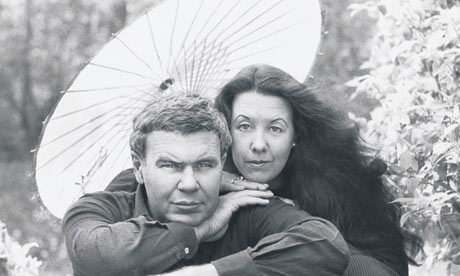
I run the comb through his lush hair,
letting it think into my wrist
the way the wrist whispers to the cards
with punctuation and savvy in a game of solitaire.
So much not to be said the scissors
are saying in the hasp and sheer
of the morning. Eleven years I've cut
his hair and even now, this last time, we hide
fear to save pleasure
as bulwark. My dearest -- the hair says as it brushes my
thighs -- my only -- on the way to the floor. If the hair
is a soul-sign, the soul obeys our gravity, piles up
in animal mounds and worships the feet. We're
silent so peace rays over us like Bernice's hair
shaken out across the heavens. If there were gods
we are to believe they animated her shorn locks
with more darkness than light, and harm
was put by after the Syrian campaign, and
harm was put by as you tipped the cards
from the table like a child bored
with losing. I spread my hair like a tent over us
to make safety wear its twin heads, one to face death,
the other blasted so piteously by love
you throw the lantern of the moment against
the wall and take me in with our old joke, the one
that marks my northern skies, "Hey, babe," you say
like a man who knows how to live on earth. "Hey,"
with your arm around my hips, "what you doing
after work?" Silly to ask now if the hair
she put on the altar, imagining her power over
his passage, was dead or living.
-- Tess Gallagher, from Moon Crossing Bridge (Graywolf Press,1992)
Sunday, February 14, 2010
"Let Me Call You Sweetheart..."

"Let me call you sweetheart..."in the days before "I'll call you," and way way before "Text me sometime."
Saturday, February 13, 2010
Happy Valentine's Day, Harvey!

Three little words:
M. C. Escher.
Two little words:
Thrift shop.
One little price:
50 cents!
Guess who's getting an actual Escher print for Valentine's Day! Yes, it's you--officially, the most spoiled husband in Kentucky!
Monday, January 04, 2010
"An Ache Is an Ache Is an Ache": A Review of A Walk Through the Memory Palace

I am so humbled by this reviewer's careful reading. Thank you so much, Carolee! If we ever meet, the Blue Moon is all on my tab.
It's a thrill for a writer to have such a reader. She's the first to mention the opening and ending of the chapbook.
I also love Gertrude Stein. To have this wonderful title associated with my poems is a huge compliment.
Wednesday, December 30, 2009
Frankenstein , or The Modern Prometheus
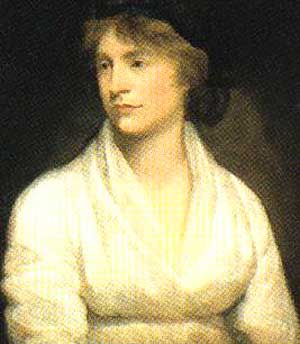
TODAY IN HISTORY: December 30, 1816
Percy Bysshe Shelley and Mary Wollstonecraft Godwin wed
On this day, Percy Bysshe Shelley and Mary Wollstonecraft Godwin wed. The pair had run away together in July 1814, but because Shelley was already married they were unable to marry for two years, until the death of Shelley's wife.
Shelley, the heir to his wealthy grandfather's estate, was expelled from Oxford when he refused to acknowledge authorship of a controversial essay. He eloped with his first wife, Harriet Westbrook, the daughter of a tavern owner, in 1811. However, just a few years later Shelley fell in love with the young Mary Wollstonecraft Godwin, daughter of a prominent reformer and an early feminist writer. Shelley and Godwin fled to Europe and married in 1816.
Shelley's inheritance did not pay all the bills, and the couple spent much of their married life abroad, fleeing Shelley's creditors. While living in Geneva, the Shelleys and their dear friend Lord Byron challenged each other to write a compelling ghost story. Only Mary Shelley finished hers and later published the story as Frankenstein.
The Shelleys had five children, but only one lived to adulthood. After Shelley drowned in a sailing accident when Mary was only 24, she edited two volumes of his works. She lived on a small stipend from her father-in-law, Lord Shelley, until her surviving son inherited his fortune and title in 1844. She died at the age of 53. Although she was a respected writer for many years, only Frankenstein and her journals are still widely read.
)))))))))))))))))))))))
For more on Mary and Percy, please check out this link:
http://www.carondelet.pvt.k12.ca.us/frankenstein/MaryShelley/Second%20Page%20%28mary%20Shelly%29.htm
Subscribe to:
Posts (Atom)